
blog archive: page 2

Catholic culture leans heavily towards traditionally left-brain traits that value fact, analysis, and structure. By contrast, large segments of the Evangelical world that have embraced more right-brain, relational approaches to ministry are seeing significantly better results in the areas of evangelism and discipleship. Despite the evidence, many Catholics remain resistant to the idea of adopting Evangelical approaches or learning from their methods.

What is we looked at the parish as a school of evangelization that focuses on training her members to evangelize outside of parish walls? There are two main objections that come to mind in this regard. First, the parish has always been a provider of pastoral care for her members. Would the focus on becoming a school of evangelization mean setting aside the valuable pastoral care our parishes provide? Second, many might object that a great number of parishioners need much more foundational formation themselves before they would be ready to be trained in evangelization. Sure, we need to do some evangelization training, but isn't it unrealistic to think that we could make that the central focus?
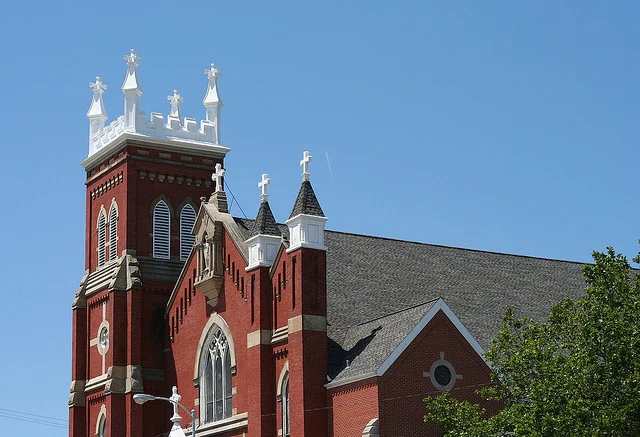
Though the parochial system has been a mainstay of Catholic culture for centuries, it remains but an optional approach to governance in the Church. That is to say, there is nothing doctrinal or dogmatic about the role of a parish, and so it is a legitimate question to ask in any age, "What is the purpose of a parish today?" The way we answer this question today may be different than in times past.

Many readers will be familiar with the technology adoption lifecycle that describes the standard pattern of acceptance of a new, innovative technology among the general public. I believe a similar lifecycle exists within the realm of revolutionary ideas that helps us understand how a revolutionary idea gains influence, and how that influence can be so easily lost if not stewarded appropriately.

There is a maxim of evangelization that I have often heard and used over the years that goes, "People don't care how much you know until they know how much you care." The saying is helpful as far as it goes, as it points would-be evangelizers to the necessity of building a relationship of trust with others through kindness and love before bombarding them with information. But there's still a bit of a false premise hidden in the statement.

Paul's letters in the New Testament are not his primary evangelism tool. They are not his first contact with the Romans, Galatians, etc. They are a follow-up to his in-person preaching of the Gospel in those places. So it is worth asking, based on these letters, "What would Paul's original preaching have to have been like?"

I had one goal when starting out this series of posts - to end the Catholic love affair with suffering, at least in the minds of some. In this final post (4/4), I want to focus on how to live a victorious Christian lifestyle. This is not a formula - all of this must flow out of a living, breathing relationship with Christ - but is meant to provide certain guideposts for pursuing the victory that Jesus has already won and wishes to extend to us.

Go ahead and re-read the Gospels. Keep a tally if you want. See how much it portrays the triumph of Christ over what afflicts man, over what steals, kills, and destroys in man's life, versus how much it talks about the need to embrace suffering in our life. (Post 3/3 on suffering.)

Malcolm Gladwell's Blink is a book about snap judgments, why they are sometimes better than our reasoned-out deliberations, sometimes worse, and how to identify which is which. It provides insights and challenges with implications on ministry and life.

I was honored recently to be invited by the Youth Apostles community to speak at one of their regular formation nights. The invitation was extended based on a series of posts I wrote on Inviting the Act of Faith, which was an exploration on my part of how we can invite people to make an explicit decision for Christ in a Catholic context. The talk I presented, which can be viewed on Youtube below, was a summary of that series with practical pointers for how to put it into practice.

Jesus instructed his disciples, "As you go, make this proclamation: ‘The kingdom of heaven is at hand.’ Cure the sick, raise the dead, cleanse lepers, drive out demons" (Mt 10:7-8). The declaration that the kingdom of heaven is at hand was meant to serve as an eviction notice to the kingdom of darkness - your time is up, it's time to move out! (Post 2/3 on suffering.)

"Unless we are making disciples, we are not really evangelizing." This poignant statement was made in a pastoral letter on evangelization recently issued by Bishope Paul Loverde in the Arlington Diocese where I live. It effectively cuts right to the heart of the matter - the goal of evangelization is to make disciples. If we want to learn how to evangelize, we need to learn how to make disciples. And for that to happen, we need to answer the question: what is a disciple?

There is a place for taking up one's cross in the Christian life. There are times when, like a good soldier, we need to accept our share of hardship for the sake of the Gospel. The Bible couldn't be clearer about this. And yet, as one preacher put it, "In the church there is an admiration for pain and suffering that goes far beyond what the Bible ever intended." Whether or not this is a uniquely Catholic problem, this is indeed a Catholic problem. There is a cultural fixation on the value of suffering that results in obscuring other Christian values, and one value in particular - the value of victory. (Post 1/3 on suffering.)

Everyone who works in ministry can relate to that feeling of, "Is this doing any good?" There has always been a certain measure of this in my ministry, but as my wife and I have embraced praying with people more regularly, that feeling has been amplified. After all, we are praying boldly and asking God to do big things. Oftentimes He does right then and there, especially in the area of spiritual healing. But more often we receive a polite and sincere thanks and go our separate ways, being left with that lingering question, "Did it work?"

Imagine with me a website designer who is courting a potential client. The web designer possesses a certain technical knowledge that allows him to deliver a product, but it would be counterproductive for him to talk about the specifics of CSS or Java coding with his unknowledgeable client. Instead the web designer will discuss how the website will engage with customers better, will be easier to navigate, the potential new audiences reached, and other benefits associated with the new design. His sales pitch, to be effective, must concentrate more on the experiential side of things.

As St. John recounts his first meeting with Jesus, it is a day he remembers right down to the very hour it happened ("four in the afternoon"). John the Baptist had just pointed out Jesus as the "Lamb of God." St. John and Andrew approach Jesus and ask him, "Rabbi, where are you staying?" The scene could have ended very quickly if Jesus had said, "I'm heading over to Galilee," and left it at that. But instead, Jesus said, "Come and see," and invited Andrew and John into the adventure of a lifetime.

Imagine you asked me what you need to do to be an elite weightlifter and I responded just by saying, "You need to bench press over 300 pounds." If you were to go out and try bench pressing 300 pounds you would literally get crushed. Getting to that point requires a process, a training regiment where you build up to the desired weight. The answer of "bench press 300 pounds" might give you a target to aim for, but what you really need is a personal trainer to guide you through the process.
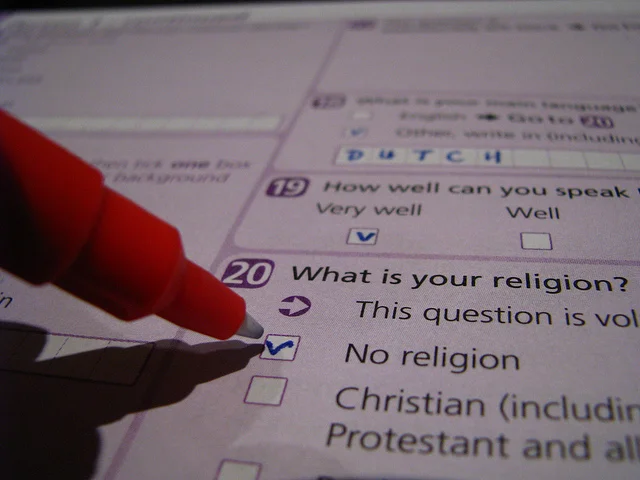
Most of us are probably familiar with the popular and somewhat new self-identification many people embrace in calling themselves "spiritual but not religious." This was originally a term primarily used by those who had disassociated with traditional organized religions in favor of a personal privatized spirituality. But in recent years it seems that a great many Christians have embraced the "not religious" designation as an important part of how they view their own experience of Christianity.

What does it mean to be a perfect Christian? What would it mean for someone to have achieved perfect maturity as a follower of Christ? Perhaps certain associations come to mind for you immediately. If we consult St. Paul on the question, we'll find that we actually receive two different answers.
"The essence of love is sacrifice." When I read these words some time ago, something in me recoiled. It was a blog post from a Christian author and had all the best intentions. But it was a lie, and one that I have seen repeated over and over again by well-meaning Christian authors. The falsehood of this statement is unmasked easily through the observation that, if sacrifice (read: "suffering willingly accepted") really is the essence of love, then there can be no love in heaven. And there can be no love within the Trinity.
A major theme in my newly developing vision for ministry is to carry an expectation that God will move in visible and powerful ways, and to invite that movement of God. My own faith was strengthened recently in seeing people receive physical healing, emotional healing, spiritual gifting, and personal words from God in prayer. As I witness more of this, I think, "Man, this is exciting stuff!" This is very quickly followed by, "Why don't we see more of this?" As I pondered this latter question, the story of Mary Magdalene in John 20 came to mind.
One of my favorite sources of inspiration is the Fresh Life Church sermon podcast. In addition to the great content itself, Pastor Levi Lusko provides a great example of what the heart of a pastor should look like in his preaching. What I love about Pastor Levi's approach is that he recognized that not everybody will respond to the same message in the same way. In other words, it was not enough for him to simply be speaking truth, he needed to account for the variety of responses that his message might be provoking.

What follows are six guidelines to keep in mind when inviting people to make an act of faith based on the uniquely Catholic perspective that I have been exploring throughout this series. (Post 8/8 on "Inviting the Act of Faith")

In Evangelii Gaudium, Pope Francis states that "in preaching the Gospel a fitting sense of proportion has to be maintained. This would be seen in the frequency with which certain themes are brought up and in the emphasis given to them in preaching" (38). I believe that a fitting sense of emphasis is lacking within Catholic ministry efforts when it comes to the fundamental act of faith on which the entire Christian edifice is built. (Post 7/8 on "Inviting the Act of Faith")

In my last post I asked what kind of encounter is needed for someone to go "all in" with God and came to the conclusion that the heart of such an encounter is the experience of rescue. It's easy to imagine what rescue may look like for the hardened sinner or the person who hits rock bottom, but what about for someone who's always played by the rules, who's always gone to church, always tried their best to do their Christian duty? (Post 6/8 on "Inviting the Act of Faith")

In order to talk about what it looks like practically to invite someone to faith, we need to identify something of what we mean by "the act of faith." In this context, we are speaking of a decision to follow Jesus unreservedly. It is, in the words of Pope John Paul II, "the decision to entrust [oneself] to Jesus Christ" (Catechesi Tradendae 25). It is an "all in" moment with Jesus that says, "My life is now a blank check in your hands." (Post 4/8 on "Inviting the Act of Faith")

How does one come to the point of a personal adherence to Jesus Christ? Pope John Paul II defined the kerygmatic component of evangelization as "the initial ardent proclamation by which a person is one day overwhelmed and brought to the decision to entrust himself to Jesus Christ by faith" (Catechesi Tradendae 25). Notice what JPII is saying here - to do kerygma right means that "the decision to entrust [oneself] to Jesus Christ by faith" follows upon an experience, an encounter. (Post 4/8 on "Inviting the Act of Faith")
Parishes cannot accomplish great things without great leadership. But a truly great parish also requires different kinds of leadership in order to grow into its full potential. I believe there are four key leadership needs for every parish: visionary leadership, team leadership, pastoral leadership, and managerial leadership.