
blog archive: page 1

We are called as Christians to "proclaim the Gospel," but I think quite often we think of this as a call to disseminate information. If the Gospel is merely information, our role becomes one of teaching, convincing, persuading - this will be the primary tool set that we employ. If, on the other hand, we remain conscious of the encounter with Jesus Christ as the goal of evangelization, a different tool set will become necessary.

Doing the work of evangelization requires real courage, but not just the kind of courage that is standing up to the culture tide, or proclaiming unpopular truths, or even stepping out of your comfort zone to have the "Jesus Conversation." Yes, these occasional acts of courage are necessary from time to time, but there are also certain everyday acts of bravery that are just as crucial.

Anyone who is a ministry professional will naturally desire to be a good steward of their time. After all, we're being paid for 40 hours a week, and so we need to make sure that we are actually doing 40 hours of work, right? We feel a need to fill up those hours to justify our salary. But the work of evangelization isn't always something that can be scheduled.

In this series on inviting the act of faith and what Catholics can learn from Evangelicals on the subject, I want to take a look at a common Evangelical doctrine that is often referenced in conjunction with the invitation to faith. This is the "once saved, always saved" doctrine. In short, this doctrine says that once one has made the act of faith, once one has given their life to Christ and accepted him as savior, one's status as "saved" can never be lost. (Post 3/8 on "Inviting the Act of Faith")

When we consider justification (being made right with God), there are two agents involved - God and man. And there are two actions involved, one proper to each of these. On the part of man, there is the act of faith. But faith in itself is incapable of producing justification for it is an act of man* (albeit one that is made possible by grace). Justification requires an action on God's part, an action that actually produces the change in man. Justification happens when the faith of man is met by the justifying action of God. (Post 2/8 on "Inviting the Act of Faith")

This post is intended to be the first in a series of posts on faith. Two things have led me to embark on this project. The first has to do with the problem that Sherry Weddell highlighted in her book Forming Intentional Disciples, namely that your average Catholic is unaware of the importance and necessity of making an explicit act of faith in Jesus Christ. The second inspiration behind this series comes from my love of listening to certain Evangelical sermon podcasts and considering their approach to inviting this act of faith. (Post 1/8 on "Inviting the Act of Faith")

It seems that the language of "discipleship" has gained a new prominence in Catholic circles, and this is a very good thing. Catholics are becoming more and more comfortable with the terminology of discipleship, but I have encountered a discomfort among many Catholics with one particular aspect of discipleship.














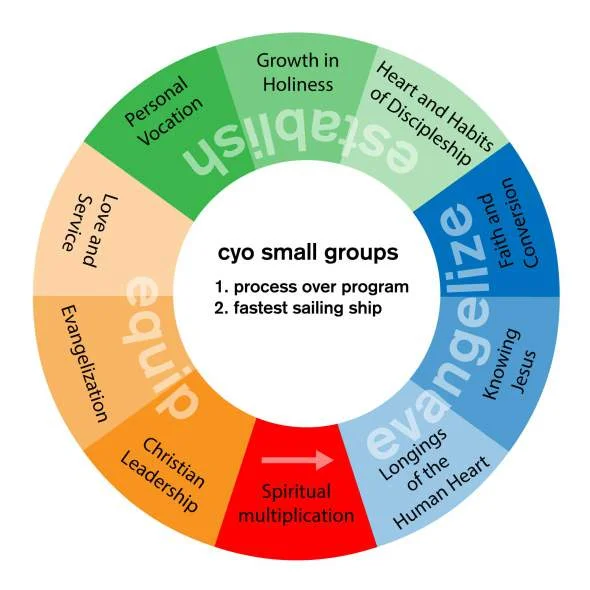



At the heart of it, pre-evangelization means keeping the other person close enough to be able to establish credibility with them. It is maintaining your connection with them, because without that connection there is no chance of issuing an invitation to faith. If we maintain that connection, then there are many ways of nurturing interest, and these will tend to be different for different people.